
- Posted on
- • Technology
The Rise of Quantum Computing: What It Means for Everyday Life
- Author
-
-

- User
- Excuse Generator
- Posts by this author
- Posts by this author
-
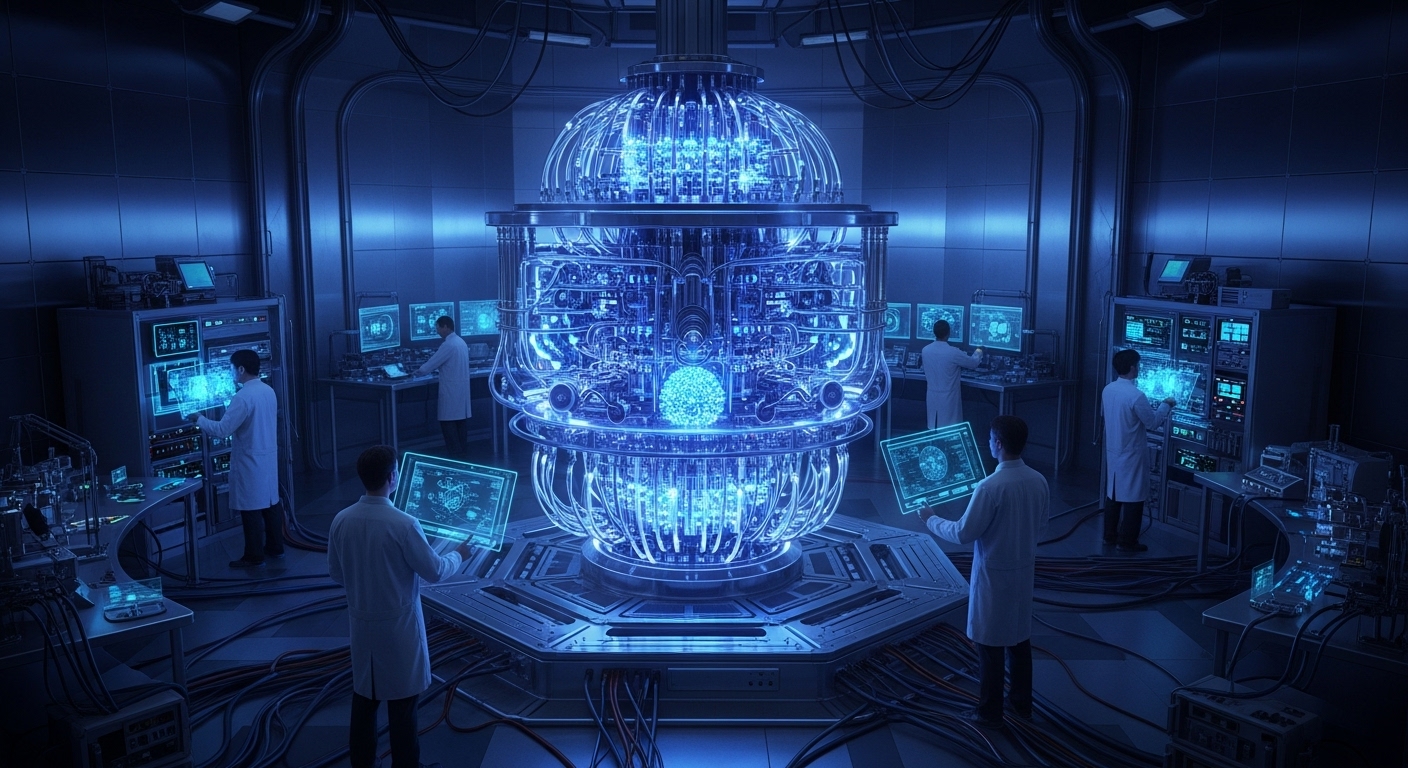
The Rise of Quantum Computing: What It Means for Everyday Life
Introduction: The Next Frontier of Computing
Computers have come a long way — from room-sized machines to smartphones in our pockets. But the next revolution won’t just make computers faster; it will completely change how they think. Welcome to the era of quantum computing — a technology that operates on the very principles of physics itself.
While it may sound complex, quantum computing has the potential to reshape industries from cybersecurity and healthcare to finance and artificial intelligence. By harnessing the strange behaviors of subatomic particles, quantum computers can perform calculations that would take today’s supercomputers thousands of years to complete.
What Is Quantum Computing?
At the core of every classical computer are bits — 0s and 1s. Quantum computers, on the other hand, use qubits, which can exist as 0, 1, or both simultaneously through a principle called superposition. This allows quantum computers to process vast amounts of data in parallel.
Additionally, qubits can be “entangled,” meaning the state of one affects the other, even if they’re physically separated. This phenomenon gives quantum systems their immense power and speed.
Why Quantum Computing Matters
Quantum computing isn’t just about faster performance — it’s about solving problems that were previously unsolvable. From climate modeling to drug discovery, it opens possibilities that classical computers can’t even attempt. Here are a few areas where its impact will be felt the most.
1. Cybersecurity and Encryption
Quantum computing poses both risks and opportunities for digital security. On one hand, it could break traditional encryption methods like RSA, which rely on mathematical complexity. On the other, it will also enable quantum encryption, making data virtually unhackable.
Governments and organizations are already preparing for this transition by investing in post-quantum cryptography — algorithms resistant to quantum attacks.
2. Medicine and Drug Discovery
Developing new medicines requires simulating molecular interactions, a process too complex for current computers. Quantum systems can simulate these at the atomic level, speeding up research exponentially. Companies like IBM Quantum 🔗 and D-Wave 🔗 are already partnering with pharmaceutical firms to make this a reality.
3. Artificial Intelligence and Machine Learning
AI thrives on data, but training massive models requires immense computing power. Quantum AI could train neural networks in a fraction of the time, enabling breakthroughs in robotics, prediction, and automation. Google’s Quantum AI Lab is already exploring this synergy to push boundaries in learning speed and accuracy.
4. Financial Systems and Risk Modeling
Banks and financial analysts rely heavily on predictions. Quantum computing can evaluate millions of market scenarios simultaneously, improving forecasting, portfolio optimization, and fraud detection.
For instance, JPMorgan and Goldman Sachs are developing quantum algorithms to refine financial models and simulate risk outcomes in near real-time.
5. Climate and Energy Solutions
Quantum simulations can model environmental systems with unprecedented precision — predicting climate shifts, optimizing renewable energy production, and designing materials for cleaner batteries. Quantum tech could help accelerate sustainability at a global scale.
Challenges to Overcome
- Hardware fragility: Qubits are extremely sensitive to temperature and noise.
- Error correction: Quantum errors must be corrected faster than they appear.
- Scalability: Building large, stable quantum processors is still difficult.
- Cost: Maintaining cryogenic temperatures and stability is expensive.
Despite these challenges, progress is accelerating. Companies like Google, IBM, and Intel are racing to build fault-tolerant quantum processors — the holy grail of this field.
Quantum Computing in the Real World
Quantum computing isn’t a distant dream anymore. IBM has launched IBM Quantum Experience, letting researchers and enthusiasts experiment with real quantum hardware online. Similarly, Amazon Braket and Microsoft Azure Quantum provide cloud-based quantum services accessible to the public.
Conclusion: The Quantum Leap Ahead
Quantum computing represents the next giant leap in technology. It won’t replace traditional computers but will complement them, tackling problems that classical systems simply can’t handle. As the world edges closer to quantum supremacy, one thing is certain — the future of computing will be stranger, faster, and smarter than ever before.
Would you trust a quantum computer to handle your data or decisions? Share your thoughts in the comments — the quantum debate is just getting started!